
The two-stage roll
Every egg runs two rolls in order: first how many passives to inherit, at 40% for one, 30% for two, 20% for three and 10% for four, then which ones, drawn without replacement from both parents' combined pool.
Stage one: how many passives an egg inherits
The weights are steeply against you, and that alone is why a four-passive child is hard work. Four inherited passives is the rarest of the four outcomes at 10%. One is the likeliest at 40%. Nothing you do to the parents shifts these weights, which is what makes stage two the only part worth optimizing.
Stage two: which passives it draws
Both parents' passives go into one pool and duplicates collapse. A mother carrying Ferocious and Swift paired to a father carrying Swift and Musclehead gives a pool of three, not four. The draw is uniform and without replacement. Each passive in that pool has the same chance as every other one, whichever parent it came from.
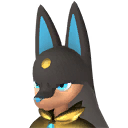
46 of the 299 Pals hatch with a fixed passive already attached. Anubis always has Earth Emperor. That slot is gone before the draw runs, which caps what the egg can inherit at three. Pals born with a passive already attached are worth checking before you plan a four-passive target.
Random passives fill the leftover slots
Any of the child's four passive slots the inheritance draw leaves empty can be topped up with a random passive, at 40% for none added, 30% for one, 20% for two and 10% for three.
This is a second weight set in the same table, and it explains the eggs that arrive carrying something neither parent had. The top-up draws only from the 85 passives the game flags for random rolls, so it can hand you Ferocious. It can never hand you Legend. It can also drop a Clumsy into the fourth slot of an otherwise perfect child, which is the part nobody warns you about.
Why a clean pool decides everything
The draw is uniform, so every passive in the pool competes with every other one, and one junk trait on either parent takes a four-passive target from 10% per egg down to 2%.
Every passive a parent carries that you do not want makes the ones you do want less likely.
Work a real pair. A Lyleen carrying Ferocious and Artisan, paired to a Shadowbeak carrying Swift and Legend, is a combined pool of exactly four. Stage one has to roll four, and once it does the draw has nothing else to pick, so all four come across. That is 10% per egg.
Now give the Lyleen a Clumsy on top. The pool is five, a four-roll now has to miss the Clumsy specifically, and the chance falls to 2%. One junk passive costs you five times the eggs. Which passives are worth a slot sorts the useful ones from the traps.
The odds table
A pool of exactly the four passives you want is 10% per egg, roughly 22 eggs before you are 90% likely to have seen one success. A pool of five is 2%, or 114 eggs.
Chance per egg of landing every passive you want, by how many you are chasing and how big the parents' combined pool is. The eggs-for-90% column is the planning number. Average eggs is the mean of the wait, and roughly two thirds of projects finish inside it, so plan against the 90% column and treat the average as the good outcome.
| Passives wanted | Combined pool | Chance per egg | Average eggs | Eggs for 90% |
|---|---|---|---|---|
| 4 specific passives | 4 | 10.0% | 10 | 22 |
| 4 specific passives | 5 | 2.0% | 50 | 114 |
| 4 specific passives | 6 | 0.7% | 150 | 345 |
| 4 specific passives | 8 | 0.1% | 700 | 1611 |
| 3 specific passives | 3 | 30.0% | 3 | 7 |
| 3 specific passives | 4 | 15.0% | 7 | 15 |
| 3 specific passives | 6 | 3.0% | 33 | 76 |
| 2 specific passives | 2 | 60.0% | 2 | 3 |
| 2 specific passives | 4 | 25.0% | 4 | 9 |
| 1 specific passive | 4 | 50.0% | 2 | 4 |
These come out of the same function the planner runs on your own box, so the numbers here and the numbers it gives you cannot drift apart.
Read the table down a column, never across. Each junk passive left in the pool multiplies the egg count instead of adding to it. Four wanted out of a pool of six is 345 eggs, and out of a pool of eight it is 1,611. That is the difference between a project and a hobby. Parent pairs for all 299 Pals tells you which species you can even use as an intermediate.
Does the male parent pass more passives? No.
Parent sex has no effect on passive inheritance. The game's breeding mechanics table holds three weight sets, one for how many passives carry over, one for random top-ups and one for talents, and not one of them is keyed to male or female.
The 24% male against 20% female split quoted on several large sites is not in the data. The only gender field anywhere in the breeding tables is the per-species chance a hatched Pal comes out male, which has nothing to do with what that Pal passes on. 255 of the 299 Pals sit at 50/50 in that field.
So put the passive wherever it is cheapest to put it. A Lamball carrying Legend is worth exactly as much to an egg as a Jetragon carrying Legend, and one of those you can hatch spares of all afternoon.
Why you will see two different numbers for the same pool
Two questions get asked here and they have different answers. A clean pool of two passes both passives 60% of the time when extras are allowed, and 24% of the time if the child has to come out holding those two and nothing else.
| Combined pool, wanting all of it | Every passive you want lands | Those and nothing else |
|---|---|---|
| 1 passive | 100% | 40% |
| 2 passives | 60% | 24% |
| 3 passives | 30% | 12% |
| 4 passives | 10% | 10% |
Both columns fall out of the same two weight sets on this page. The left one counts an over-roll as a success. The draw is without replacement, so asking for four passives from a pool of two hands over the two that exist. The right one then multiplies by the 40% chance that no random passive fills the slots the draw left free.
At four inherited passives the columns meet at 10%. Nothing is left free for a top-up to land in, so there is no junk to exclude, and that is the real reason 10% is the one figure every site agrees on. palworld.wiki.gg publishes both columns as well, under Cumulative and Cumulative Without Random. We agree with them.
Pick by what you are doing. For a mount you will ride all save the left column is your number, because a spare Clumsy in slot four is survivable. For a parent that feeds the next step of a chain use the right one, because junk on that parent widens the pool for every egg after it. Cleaning down to two wanted passives is 3 eggs loose and 9 strict.
The planner prints both against every pair it ranks. The headline percentage is the left column and the smaller figure beside it, labeled clean roll, is the right one.
How to strip a pool
Pool size is the only lever you control, so clean the parents before you chase the final child. Junk is cheaper to breed out of a common intermediate than out of a rare target.
- Breed toward single-passive parents first. A parent with one wanted passive and nothing else beats a parent with three wanted passives and two junk ones. Every time.
- Split the target across both sides. Two wanted passives on each parent is a clean pool of four. All four on one side with two junk on the other is a pool of six, and the table above prices that at 345 eggs.
- Check the worse parent, not the good one. The pool is shared, so the parent you are not looking at sets your ceiling.
- Reroll the intermediate, not the target. A clean intermediate is cheap to hatch again. A rare final child is not.
Palworld 1.0 added a way out of a near miss that most guides have not caught up with. The Pal Surgery Table implants a passive into a slot on a Pal that has already hatched, and the game warns that doing so overwrites whatever was in that slot. A three-of-four child is repairable now. It used to be scrap.
None of that beats pool hygiene. Rolling harder against a pool of six will never turn it into a pool of four.
Which passives can be inherited
Nothing in the game's tables blocks a passive from passing parent to child, Legend and the element-emperor passives included. The 85-of-115 inheritable flag governs random rolls only.
That flag governs the lottery and says nothing about breeding. The 85 flagged passives are the ones a wild Pal or a random egg bonus can roll. The other 30 never appear at random, so a parent is the only route any of them has into a new Pal. A bred carrier of one is worth keeping even when the rest of its passives are rubbish.
The full 30, in the game's own rank order.
Demon’s Hand, Dimensional Leap, God of Destruction, Hermit Sage, Sanctified Meat Shield, Twin-Edged Holy Blade, World Tree Seedbed, Babysitter, Eternal Flame, Heavily Armored, Idiosyncratic, Immortality, Invader, Legend, Lucky, Lunker, Savior, Siren of the Void, Skymarcher, Celestial Emperor, Divine Dragon, Earth Emperor, Flame Emperor, Ice Emperor, Lord of Lightning, Lord of the Sea, Lord of the Underworld, Spirit Emperor, Whopper, Otherworldly Cells
Legend sits in that group, which is exactly why breeding outward from a caught carrier is the only way to spread it. The Legend passive chain, step by step runs that chain end to end, carriers included.
Can anything improve these odds?
Two things move the numbers on this page. Pool size, which you control outright, and Special Cake, which the game's own description says makes a Pal more likely to inherit multiple passive skills from its parents. It publishes no size for that effect.
Everything else is fixed. The weight sets do not respond to parent level, parent sex, the species involved or the incubator you hatch in, and the Ancient Hatchery gets no inheritance effect in any data table. Pool hygiene first, Special Cake second, nothing third. What each of the five cakes does to the egg covers the other four and what a 22-egg run costs to feed, and how the breeding table picks a species covers the roll that happens before this one.
Every number above is a per-egg figure, and the useful version is the one for the Pals you already own. Read your box straight out of Level.sav and the planner ranks your own pairs by exact odds, naming which parent should carry what at each step.
Frequently asked
- What are the odds of getting all four passives in Palworld?
- 10% per egg when the parents' combined pool is exactly the four you want, which works out to about 22 eggs for a 90% chance of at least one success. Every extra passive in the pool cuts it hard, and a pool of five is 2%.
- Do both parents need the passive for the child to inherit it?
- No. A passive carried by only one parent can be inherited, because both parents' passives go into one shared pool. Our model treats that pool as a set, so a duplicate collapses to one entry and carrying it twice changes nothing. The game publishes no weighting either way.
- How are passive skills inherited in Palworld?
- In two stages per egg. The game first rolls how many passives to pass down, at 40%, 30%, 20% and 10% for one through four, then draws that many at random from both parents' combined pool without replacement.
- Is it better to breed a Pal with more passives?
- Not if the extras are ones you do not want. Pool size drives the odds, so a parent carrying one wanted passive and nothing else beats a parent carrying that same passive plus two junk ones, every single time.
- Does the male parent pass down passives more often in Palworld?
- No. The game's breeding mechanics table contains three inheritance weight sets and none of them is keyed by parent sex. The 24% male against 20% female split quoted on several large sites does not come from the game data.
- How do you get rid of unwanted passive skills in Palworld?
- Two ways in Palworld 1.0. Breed the cluttered Pal against a partner with no passives and keep only the offspring carrying what you want, or take it to a Pal Surgery Table and implant over the slot, which the game warns overwrites whatever was there.
- Can the Legend passive be inherited through breeding?
- Yes. No passive in the game is blocked from passing parent to child, Legend included. What Legend is excluded from is the random lottery that wild Pals and random egg bonuses roll, which is why breeding is the only way to spread it.
- How many eggs does a four-passive Pal take in Palworld?
- Around 22 from a clean pool of exactly four, at 10% per egg. A pool of six is 345 eggs for the same confidence and a pool of eight is 1,611, which is why cleaning the parents beats rolling harder.
Run the math against your own box
The planner does everything on this page for you. Load your Level.sav and it
applies all of it to the pals you actually own, with the odds at every step. Nothing is
uploaded.
Keep reading
Breeding pages for all 299 pals carry every parent combo, the shortest route and the passive odds, one page each.