
What you need before your first egg
Breeding needs a Breeding Farm built at one of your bases, one male and one female Pal assigned to that base, and cake in the farm's feed box. Nothing else gates it. Neither parent is consumed, and neither has to be leveled first.
Building the Breeding Farm
The Breeding Farm comes out of the technology tree and goes down like any other base structure. It needs a base with a Palbox, because assignment to that base is what puts a pair in the pen. Carrying them in your party does nothing. That catches people out.
One farm handles one pair. A serious operation runs several pens.
Cake in the feed box, one per egg
The box on the side of the farm is not the base feed box, and it takes cake specifically. The game says what cake is for. Put one in the chest at a Breeding Farm and the pair lays a particularly healthy egg. One cake goes per egg, so the ranch behind the cake is the real cost of any long chain, and the cake recipe and the ranch that supplies it covers the supply side.
How Palworld decides which Pal hatches
Palworld averages the two parents' hidden breed ranks and hatches whichever species sits closest to that average. That is the whole species rule. Parents and child share no element and no family resemblance, which is why the pairings look arbitrary written down.
Breed rank, averaged
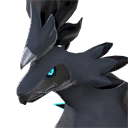
Breed rank is one number per species. It runs from 20 to 3,100 across all 299 Pals. Low means rare. Jetragon sits at 70, Anubis at 480, Lamball at 3,050. Average a common Pal against a rare one and you land somewhere in the middle of that list. Neither parent is where you end up.
Two Fire Pals average to whatever they average to. The child can be Water. Every pairing you can make out of the 299 Pals produces something, all 44,850. Count rows instead and you get 44,849, because Katress with Wixen is the one pairing the table splits in two on gender. Anubis alone has 234 pairs that produce it, and all 44,849 parent pairs by Pal gives every species its own page.
The pairs that ignore the average
Some results are fixed recipes the averaging never touches. 27 Pals have exactly one parent combination in the whole table. That is a unique combination, and in every one of those 27 cases the pair is two of itself. Jetragon breeds from Jetragon. Frostallion breeds from Frostallion. For those, catching one is the entry point and breeding is only how you make the second.
One Pal has no parents at all. Panthalus is flagged in the game's tables as ignoring breeding combinations and has no recipe of its own, so no egg can ever produce it. Most calculators publish a Panthalus plus Panthalus pair anyway, inherited from the same upstream dataset. Run that pair in game and you get Aegidron.

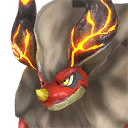
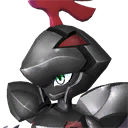
both catchable in the wild · found from about level 46. Parents must be opposite genders.
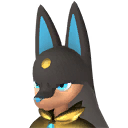
Two unrelated-looking parents average out to Anubis's breed rank. That is the whole mechanic, drawn.
Why your breeding farm is not producing eggs
A farm holding two Pals and producing nothing is almost always short of cake or holding two of the same gender, and the pen itself tells you which. Read its status line.
That line is the fastest diagnostic in the game and hardly anyone mentions it. Working normally it reads "Love is blossoming between the two Pals!" Out of cake it reads "Not enough cake." With two males or two females in the pen it reads "Male and female not present." When breeding stops for any other reason it reads "Stopping breeding..."
If the line reads normally, the fault is one of six things. Work down this list.
- Cake in the farm's own box. The base feed box is a different container and the farm cannot reach it.
- One male and one female. Gender is a per-species roll, so a hatch can easily come out the wrong way round.
- Both parents assigned to the base. A party Pal standing in the pen is a tourist.
- Food for the pair. Hungry Pals stop working, and the cake box does not feed them.
- Room for the eggs. Uncollected eggs pile up in the pen and the farm stops once that pile is full.
- Flat ground. Eggs drop on the floor of the pen, and a sloped pen puts them somewhere annoying.
What will not happen is a pair refusing each other. Any male plus any female produces something, because the averaging always lands on a species. Fed pair, right genders, cake in the box. The egg is coming.
Gender ratios, and the routes they break
Every pair needs one male and one female, and 255 of the 299 Pals roll a straight 50/50. The other 44 are skewed. Some lean as far as 10% male.
The skewed ones are where routes stall. Beegarde, Elizabee, Bellanoir and Bellanoir Libero hatch male 10% of the time, and Kingpaca and Kingpaca Cryst lean the other way at 90%. Nothing is locked to a single gender, so there is no species you simply cannot pair. There are species you will reroll five times to get the half you need. Check that before you commit cake to a route.
Palworld 1.0 hands you an out. The Pal Reverser is a medicine used at the Pal Surgery Table, and it changes a Pal's gender outright, so a wrong-gender hatch of something rare stops being a dead end. Gender does more than gate the pair in two recipes, where it decides the result outright. Katress paired with Wixen gives Katress Ignis when the Katress is female, and Wixen Noct when the Katress is male.
How long an egg takes to hatch
Hatch time comes from the egg's size and from your world's incubation-time setting, so the same egg can take an evening on one save and minutes on another. The parents change nothing about it.
Eggs come in three sizes per element and the game names them plainly. A Common Egg, a Large Common Egg, a Huge Common Egg, then the same three steps for the Scorching, Damp, Verdant, Electric, Frozen, Rocky, Dark and Dragon sets. Bigger egg, longer wait. The world setting that controls the clock is written against the largest egg in the game and notes that the smaller ones still take time.
The incubator reports on the egg too. It shows an Incubation Speed and a comfort state that runs from "Seems very cold." through "Seems very comfortable." to "Seems very hot." A heat source or a cooler next to the incubator is the part of hatch time you can act on directly.
The incubator tiers
There are four incubator tiers plus a 1.0 structure that folds breeding into the same building. Egg Incubator, Large Incubator, Electric Egg Incubator, Large-Scale Electric Egg Incubator, Ancient Hatchery. What each tier adds shows up in the structures' internal names. The Large tiers are marked as multi-egg and hold several at once. The electric tiers want power. The Ancient Hatchery is marked as the one that breeds in place, so a pair and their eggs share a building.
No table in the game export gives any tier a hatch-speed figure. Capacity and breeding in place are what the data supports, so if a guide quotes you a percentage off an incubator upgrade, ask where it came from.
Passives, IVs and moves are three separate rolls
Species is decided by breed rank, and the passives, IVs and active skills an egg carries come from three further rolls that happen per egg and never look at each other. Four rolls, one egg.
A perfect-stat child and a perfect-passive child are separate lottery tickets out of the same egg. Rerolling one does not protect the other. Route first, then clean the passive pool.
How IVs are inherited
The game calls them talents. Each egg inherits one, two or three of the parents' talent values, weighted 50%, 33% and 17%, and anything not inherited is rolled fresh.
The split quoted elsewhere, 30% from the father against 30% from the mother and 40% random, is not in the game's tables. What is in there is one weight set keyed to how many talents carry over, with no reference to which parent they came from. Two good parents raise the floor. Neither guarantees the child.
Passives
Passives run a two-stage draw of their own out of a pool both parents feed. The per-egg passive inheritance odds has the weights, the pool math and the number of eggs each pool size takes. Read it first. Pool size is the one thing on this page that turns an evening into a weekend.
Active skills travel too. 103 of the 320 skills in the game can pass from a parent into an egg, and 93 of them have a skill fruit that skips the question entirely. Every active skill and who learns it says which is which.
What a mutated egg is and how you get one
Mutated eggs are their own items in Palworld 1.0, described by the game as extremely rarely obtained and having undergone a special mutation. Extravagant Vegetable Cake is the feed that makes mutations more likely.
They come in the same three sizes as everything else. Mutated Egg, Large Mutated Egg, Huge Mutated Egg. No rate appears in any data table, so the percentages quoted around the internet are somebody's estimate. Treat them that way.
1.0 also brought four cakes beyond the plain one, and each bends a different part of the egg roll. Which cake does what to the egg has all five with the game's own wording against each.
Plan the route before you spend the cake
Breeding a target from scratch can run five or more generations, while breeding it from the Pals already in your box can be one or two steps, because your box already sits partway up the tree. Your box is the shortcut.
The planner works the 44,849-pair table backwards from what you own and returns the shortest chain, with the per-egg odds attached at every step. The table is the game's own, shipped verbatim. Nothing here is approximated from the rank formula, which is why the pair counts run well past the calculators advertising 19,044. Find your Level.sav first.
Two more things before a long project. Chain breeding the Legend passive covers the endgame version of this, where the passive matters more than the species. And if cake supply is what slows you down, ranch Pals with Farming suitability is the list to staff from.
Frequently asked
- What level do you need to breed in Palworld?
- Breeding has no Pal level requirement at all. A level 1 Pal you caught two minutes ago breeds exactly as well as a level 50 one, because only species and gender feed into the result. Your own character level gates the Breeding Farm tech, not the Pals.
- Why is my Palworld breeding farm not producing eggs?
- Read the pen's status line first, because it names the fault. "Not enough cake." means the feed box is empty, and "Male and female not present." means the pair is the same gender. If the line looks normal, check that both parents are assigned to the base and not merely sitting in your party.
- Do the parents need to be the same species?
- No, and most of the time they should not be. The game averages both parents' breed ranks to pick the child, so different species is how you move around the table. Same-species pairs are for rerolling passives on a species you already have.
- Why did I get a completely unrelated Pal from my pair?
- Because breeding averages hidden breed ranks and ignores element and appearance completely. Two Fire Pals routinely produce something that is neither Fire nor similar to either parent. Check the pair against a 1.0 table before you commit cake to it.
- Does the parents' level affect the child in Palworld?
- Level does nothing. Talents and passives are rolled per egg from what the parents carry, so better parents raise the odds of a better child without guaranteeing one. A level 50 parent gives you no edge over a level 1 one.
- How long does it take to hatch an egg in Palworld?
- Hatch time scales with egg size and with your world's incubation-time setting, so a Huge egg takes far longer than a Common one and two players can see different times for the same egg. The incubator's comfort readout is the other half of it.
- How many breeding combinations are there in Palworld 1.0?
- 44,849 valid parent pairs across all 299 Pals, from the game's own 1.0 breeding table. Most Pals have hundreds of pairs that produce them, and 27 can only be bred from two of themselves.
Run the math against your own box
The planner does everything on this page for you. Load your Level.sav and it
applies all of it to the pals you actually own, with the odds at every step. Nothing is
uploaded.
Keep reading
Breeding pages for all 299 pals carry every parent combo, the shortest route and the passive odds, one page each.